

Tin, Pewter or Bronze? Cornish Heritage Metals Compared
Updated: Oct 16
Tin, pewter or bronze: which one belongs in your jewellery box? At first glance, these heritage metals can look like cousins, but they do not behave the same way next to your skin or on a sunny windowsill. If you are new to cornish tin jewellery, the choice can feel trickier than it looks. A tin keepsake, a pewter pendant and a bronze earring each have their own personality, and that personality changes as the metal ages.
In this post, we will compare Sennen's three heritage metals side by side so you can choose with confidence. You will find out why tin, pewter and bronze age so differently, what Cornish heritage means in this range, and how each metal looks and wears: bright, cool tin for keepsakes; soft matte grey pewter for cast detail; and warm bronze whose patina deepens with wear. We will also cover matching metal to meaning and to how you feel about ageing, keeping heritage metals happy in coastal salt air, common questions, and simple next steps for choosing your piece.
Why Tin, Pewter and Bronze Age So Differently
Tin, pewter and bronze are not three finishes of one metal. They are three alloys, and each surface behaves differently. Choose the metal for the piece's meaning and how you feel about ageing, not by default.
Tin is a soft, low-melting metal, in working terms, that means it responds to fine detail in the mould and warms quickly against the skin. Pewter is a tin-based alloy strengthened with copper and antimony. Bronze is a copper-based alloy containing tin.
In our experience as makers, a metal's softness and the oxide layer on its surface are what determine whether it stays bright, goes quietly matte, or deepens into patina. We will compare all three on colour and finish, weight and feel, cast detail, ageing, care, and best-suited pieces.
One label up front: the advice later on matching metal to meaning is Sennen's editorial guidance as makers, not a research finding. Think of it as our maker's view, then decide.
What Cornish Heritage Means in This Range
Before we compare the metals, let us be plain about provenance. Sennen's collection is inspired by Cornwall and its coastline, and not every piece is made in Cornwall. That matters because heritage metals carry a story, and the story should be told honestly.
Cornwall's tin mining history is recognised through the Cornwall and West Devon Mining Landscape UNESCO World Heritage listing, inscribed in 2006. The county's mines also yielded copper and arsenic, but you do not need the geology to choose a pendant. The heritage is the backdrop, not the buying decision.
What signals handmade Cornish jewellery in practice? Not the label alone. Look at the maker's finishing, the crispness of the cast detail, and the care guidance supplied with the piece. Those three things tell you more about how it was made and how it will age than any stamp.
Start by browsing the latest arrivals, then keep each metal's behaviour in mind as we take them in turn.
Cornish Tin: Bright, Cool and Made for Keepsakes
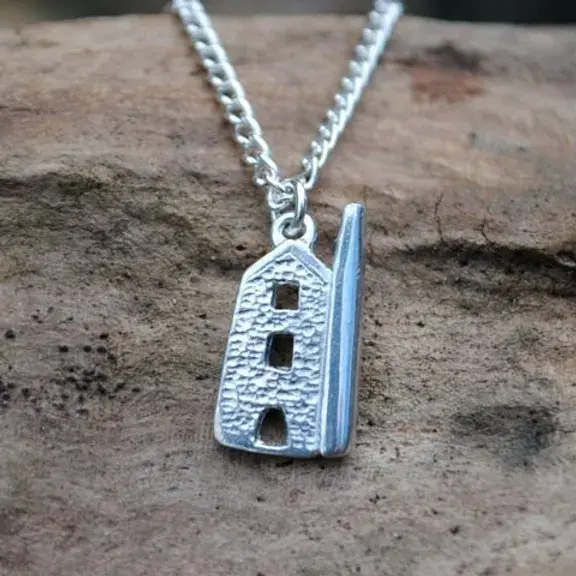
If you are shopping for Cornish tin jewellery, the look comes first. Tin reads bright and cool: a silvery white with a cooler cast than bronze and a crisper shine than pewter's soft matte grey. It sits light on the skin and warms quickly in the hand, because tin is, in our experience, a relatively soft, low-melting metal. That softness matters for delicate designs. Hairline chains and paper-thin shapes need gentler wear than a solid pendant or charm, so keep very fine pieces for occasional use rather than everyday knocks.
Where tin earns its place is detail. In our casting experience, tin holds crisp edges and lettering well, which is why engraved names, dates and small coastal motifs stay sharp and readable. It also holds its colour. Unlike bronze, tin does not deepen into a rich patina. In our experience at Sennen, tin pieces stay close to the bright finish they arrived with, so a keepsake tends to look much as it did on the day it was given.
That makes tin the natural choice for charms, engraved pendants and small earrings tied to a moment or a milestone. Browse our Cornish tin jewellery to see the pieces we mean.
Pewter Pendants and Necklaces: Soft Matte Grey That Holds Detail
Unlike tin, pewter goes the other way on purpose: its surface is a soft matte grey with a low, gentle sheen, quieter and less mirror-like than tin or sterling silver, which suits coastal motifs that should look understated rather than flashy.
Pewter Pendants: Detail Without the Shine
Pewter is a tin-based alloy, traditionally about 92% tin with small amounts of copper and antimony for strength. That mix is eminently castable, and rubber-mould casting has long been used for finely detailed jewellery, so wave, pebble and dolphin motifs come out defined rather than blurred.
Pewter Necklaces: Weight You Can Feel
Lift a pewter necklace and the difference is plain: in our experience handling both metals, pewter feels noticeably heavier than tin, substantial against the collarbone without pulling. That weight is part of the appeal.
How Pewter Ages
In our making experience, the matte grey mellows and gains soft depth with wear, and polishing changes the finish rather than restoring a mirror shine.
Best for detailed pendant and necklace designs worn often, for buyers who want detail without high shine. Browse the pewter pendants and necklaces to find the motifs this suits.
Bronze Pendants: Warm Patina That Deepens With Wear
Bronze is the warmest of the three. Where tin reads cool white and pewter soft grey, bronze brings a golden brown tone that deepens rather than fades. In Sennen's range that warmth suits the chunkier coastal designs, like a bronze dolphin pendant or a pebble-inspired piece.
As a copper-based alloy, bronze reacts gradually with air and with the natural oils in your skin, in our experience this is what builds the patina. Over months the surface darkens into a patina, a rich, even deepening most wearers want. Tarnish is different: the dull, patchy build-up that gathers unevenly and looks tired. Patina adds depth; tarnish looks like neglect.
That means a bronze pendant changes with its owner, so no two end up looking quite alike. Some wearers let the patina build for years, while others polish back toward the original bright gold. Both are normal choices.
In our making experience, bronze pieces feel the densest of the three in the hand, which makes them a natural fit for statement pendants and larger earrings rather than very fine chains. Best for buyers who like visible ageing and a piece that looks lived-in. Browse the bronze collection to see it in person.
Tin, Pewter and Bronze Side by Side
Seen side by side, the differences are easier to weigh:
Use it in three steps: meaning first, then detail, then the wearer's attitude to ageing. Sterling silver and 9ct gold sit at the 925 and 375 standards respectively (Hallmarking Guidance Notes). When you're ready, browse the tin, pewter and bronze collections.
Matching Metal to Meaning and to How You Feel About Ageing
This is Sennen's guidance as makers, not a research verdict. There is no best metal here, only the one that suits the piece and the person.
Keepsakes, gifts and milestone pieces. Tin stays close to how the piece was given, so a bright, cool tin keepsake keeps its original look.
Everyday coastal wear where detail matters. Pewter suits intricate wave, pebble and dolphin motifs and reads quietly against clothing, which is why it works well as a daily pewter necklace.
Wearers who enjoy change. Bronze suits people who like a piece to show its history, since patina deepens and personalises over months and years. That is a preference, not a quality ranking.
Four steps decide it:
What the piece means.
How much detail it needs.
How the wearer feels about the metal changing.
How much care they will realistically give it.
Then browse the tin keepsakes, pewter pendants and necklaces, and bronze statement pieces.
Keeping Heritage Metals Happy in Coastal Salt Air
Salt air holds moisture against a metal surface, so surface reactions speed up and a piece worn on the Cornish coast will change faster than the same piece worn inland. That is normal, and a few simple habits keep it in hand.
After a day by the sea, rinse sea spray and sunscreen off with fresh water, dry with a soft cloth, and store the piece in a dry pouch away from open windows and damp rooms.
This is Sennen's care guidance based on our experience working with these metals: tin and pewter respond well to mild soap and a soft cloth; abrasive polishes will strip pewter's matte finish. Bronze needs a light polish only if you genuinely want to remove patina. Leave it and the colour deepens instead.
Some change is expected, not damage. Matte pewter settling a shade deeper and bronze darkening are ordinary ageing. In our experience, patchy dullness or green residue is the sign that your cleaning routine needs attention.
Every piece is finished differently, so follow Sennen's care guidance for your specific piece rather than generic advice. Looked after well, these metals age gracefully and keep their character.
Tin, Pewter and Bronze: Common Questions
Still weighing things up after the care advice above? These five questions come up most.
Is pewter the same as tin? No. Pewter is a tin-based alloy with small amounts of copper and antimony added for strength and castability, relatives, not the same material.
Which metal should I choose for a pendant I wear every day? Pewter for intricate everyday motifs, tin for bright keepsake pieces, bronze if you want the piece to change with you.
Will bronze leave a mark on my skin? Bronze contains copper, and in our experience some wearers notice a faint dark or green trace where it rests, cleaning the piece and skin after wear usually keeps this in check.
How do I stop pewter going dull in coastal air? Store it dry in a pouch, rinse sea spray off with fresh water and dry it, and avoid abrasive polishes on matte surfaces.
Does Sennen make pieces in all three metals? Yes. Tin, pewter and bronze all feature in the range, inspired by Cornwall and the coast, though not every piece is made in Cornwall. Browse the tin, pewter and bronze collections, and follow the care guidance for the piece you choose.
Choosing Your Metal: Next Steps
With the questions behind you, the choice comes down to three simple lines. Tin suits bright, cool keepsakes that hold their look. Pewter gives a soft matte grey that carries fine coastal detail. Bronze brings a warm patina that deepens and becomes personal.
As covered above, two questions settle it: meaning and attitude to change.
One care step you can start today: rinse and dry your jewellery after sea or sunscreen exposure, then store it in a dry pouch.
Ready to choose? Browse the tin keepsakes, pewter pendants and necklaces, and bronze statement pieces. Then check the care guidance for the piece you pick, so it ages beautifully on the coast.
Conclusion
Each metal has its own character: tin bright and cool, pewter quietly detailed, bronze warm and deepening. Care is simple, rinse, dry and store in a pouch, and the choice comes down to meaning and how you feel about ageing. Browse the tin, pewter and bronze collections, then follow the care guidance for your piece. Choose the metal that matches your story, and let it age beautifully beside you.


Comments